
Precision engineered in the UK
35 years in the UV curing industry
Benford UV have been leaders in the curing industry for over 35 years. By acquiring the complete Primarc UV intellectual property, technical data and key people, we have preserved a 50-year legacy of British manufacturing. Today, we provide high-output replacement lamps for any global UV system.
The science of UV curing
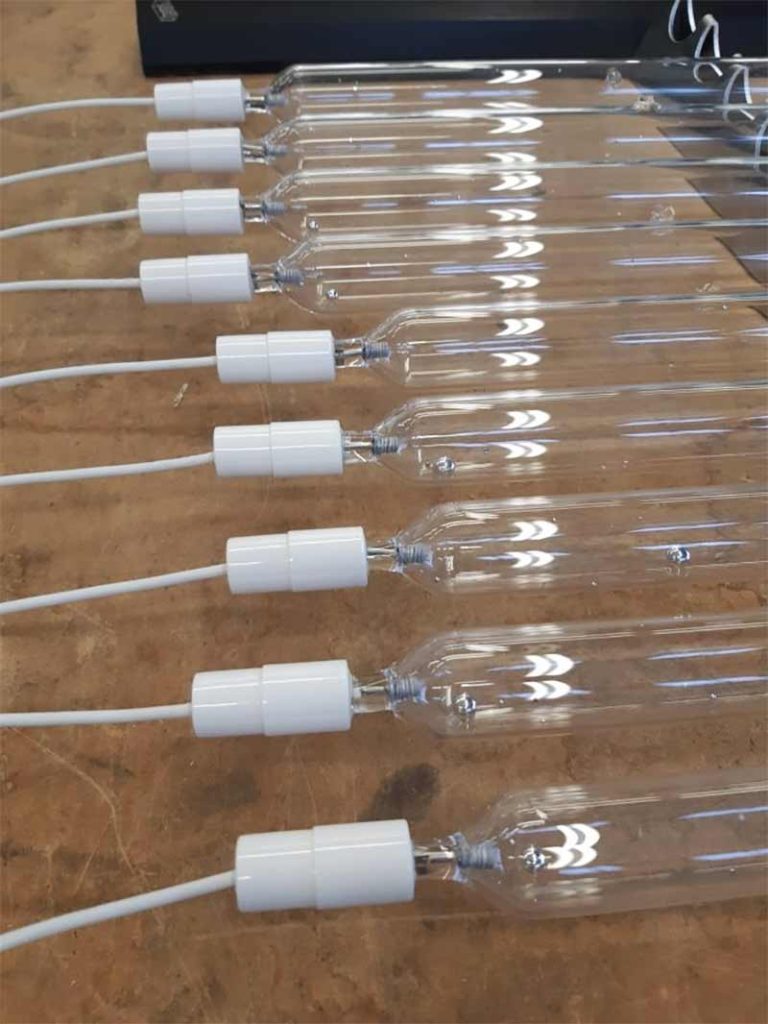
The anatomy of an OE-standard UV curing lamp
Ultraviolet reactive inks and coatings require a high-intensity source of UV light to initiate an almost instantaneous chemical reaction. The ultraviolet wavelengths most suitable for this process lie between 200 and 400 nanometres.
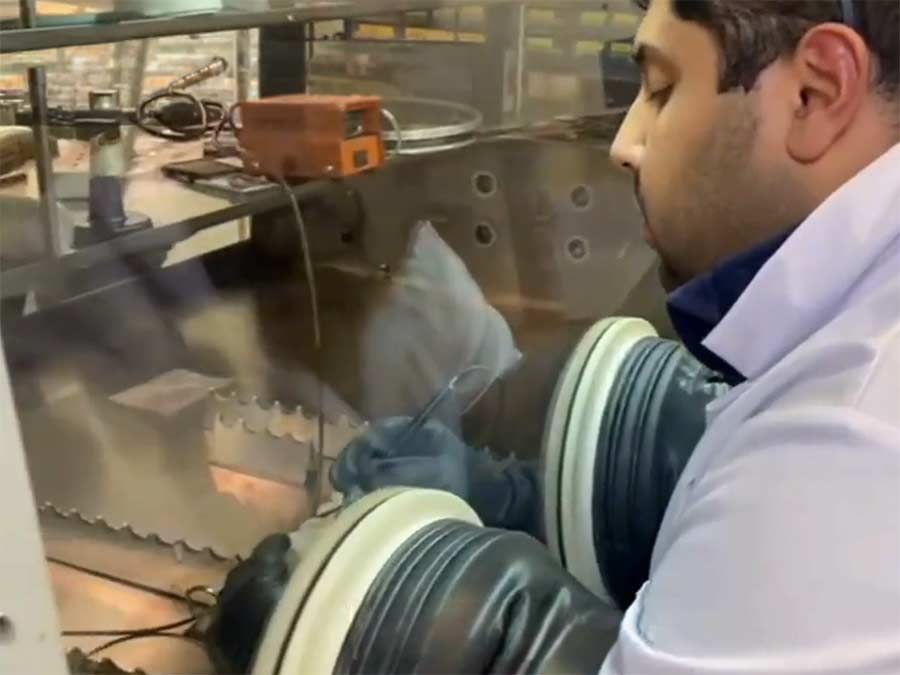
Every lamp we produce is hand-crafted to withstand extreme industrial conditions:
- Vitreous silica quartz. We use high-purity transparent vitreous-silica. Unlike normal glass, this material has 90% transparency to ultraviolet light and can withstand normal operating surface temperatures between 600°C and 800°C.
- Tungsten electrodes. Our electrodes are made from tungsten rod overwound with tungsten wire to withstand internal arc temperatures exceeding 3,000°C.
-
Hermetic foil seals. Because quartz has a low expansion characteristic, we use molybdenum foil to connect the internal electrodes to the external power supply, ensuring a stable, high-voltage arc.
Suitable for all applications
We manufacture a wide range of medium-pressure mercury arc (MPMA) lamps. While standard lamps emit approximately 20% UV, 60% infrared, and 20% visible light, we can shift this output through specialised doping:
-
Standard mercury (Hg). The industry standard for most UV inks and clear coatings.
-
Iron doped (Fe). Enhanced output in the 360nm to 400nm range for thicker, opaque coatings.
-
Gallium doped (Ga). Designed for deep penetration through heavily pigmented layers.
-
Ozone-free options. Doped quartz filters out the vacuum-UV wavelengths (below 200nm) that generate ozone.
Place an order
Ordering replacement UV lamps is easy, simply complete our order enquiry form by providing us with your lamp part number – usually found on your existing lamp – and a photo that shows the complete unit, including end caps. 99% of lamps can be instantly identified this way.
If your lamp markings have worn away or aren’t available, our engineers can still manufacture a 100% technical match, we just need a few key measurements:
Lengths. Overall length, shoulder to shoulder and arc length.
Width. The diameter of the quartz body.
Connections. The length of the electrical leads on each side.
Chemistry. Let us know if you are curing standard inks (Mercury) or thick, pigmented coatings (Iron of Gallium Doped).